

Badia a Coltibuono
Founded in the 1950s thanks to the vision and good managerial skills of Piero Stucchi Prinetti, Badia a Coltibuono is today considered one of the first places where Chianti Classico is produced, but over the centuries it has played different roles.
In fact, in the past it was an old abbey of Benedictine monks which, despite its transformation into a villa, still has the same structure as in 1051 and the same attention to biodiversity and organic farming.
The first to cultivate the lands of the abbey with vines, olive trees, silver firs and chestnut trees were the Vallombrosian monks and the name ‘Badia a Coltibuono’ derives from them , synonyms for good worship, good culture, good agriculture and good storytelling.
From then on, the place experienced a period of wealth and prosperity until its decline in 1810 when, after the expulsion of the monks from all the monasteries, the abbey was suppressed and sold, and its rooms turned into farms. Badia a Coltibuono flourished again in 1846, when it was purchased by the Florentine banker Michele Giuntini, the ancestor of Pieto Stucchi Prinetti, who was responsible for its transformation into a modern winery and the beginning of the production of Chianti Classico, which had been kept until then in the cellar as a family reserve.
Badia a Coltibuono extends for 800 hectares; its vineyards are located in 53 of these and are managed according to the principles of organic farming which uses only natural substances to minimise the use of copper and produce products that are completely natural. The vines are supported with chestnut stakes and fed organically with organic fertilisers and controlled grassing. The cultivation includes Sangiovese, Canaiolo, Ciliegiolo, Colorino, Mammolo, Malvasia Nera, Pugnitello, Fogliatonda and Sanforte.
Vinification, refinement and bottling take place in the Cantina dei Monti, the modern fortress built with respect for the surrounding landscape and eco-sustainability to enhance the characteristics of elegance and uniqueness of the individual products. The harvest is processed here by gravity, extracted by pressing, fermented with indigenous yeasts from the grapes themselves and aged in oak barrels.
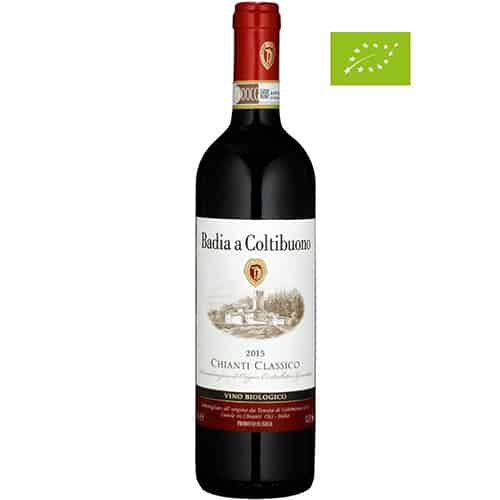
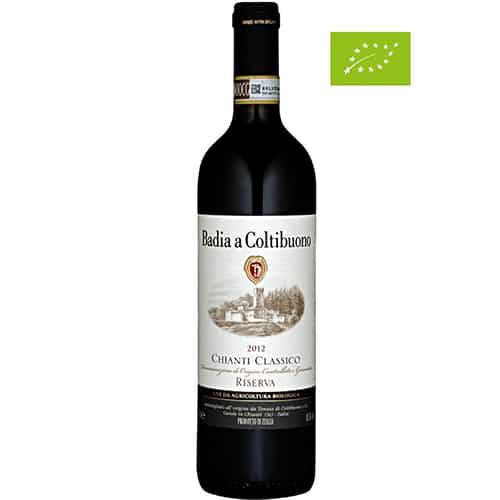
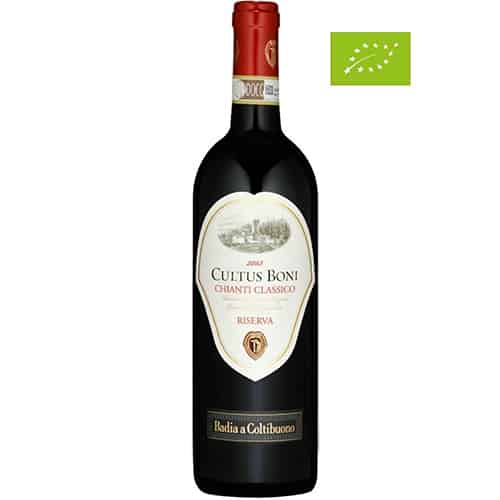
The wines produced by Badia a Coltibuono include Chianti Classico (also available in its most prestigious version, Riserva), Cultus Boni Chianti Classico Riserva and Sangioveto.
Frequently Asked Questions
Where is Badia a Coltibuono located and in what area of Chianti does it produce?
Badia a Coltibuono is located in Chianti Classico, with an 800-hectare property of which 53 are under vine. The building still preserves its original 1051 structure, when the abbey was founded by Vallombrosan monks.
Who founded Badia a Coltibuono as a modern winery?
The old Benedictine abbey was suppressed in 1810 and sold, then began to flourish again in 1846 thanks to Florentine banker Michele Giuntini's purchase. It was in the 1950s, however, that Piero Stucchi Prinetti, a descendant of the Giuntini family, turned the estate into a modern winery, launching true commercial Chianti Classico production.
Does Badia a Coltibuono produce organic wines?
Yes: the vineyards are managed according to organic farming principles, with copper use kept to a minimum, chestnut posts supporting the vines and organic fertilization. Vinification takes place by gravity in the Cantina dei Monti, with spontaneous fermentation from indigenous yeasts.
What wines does Badia a Coltibuono produce?
Production includes Chianti Classico, also in Riserva version, Cultus Boni Chianti Classico Riserva, and Sangioveto, a pure Sangiovese that is the most identity-defining expression of the abbey's terroir.
Showing all 5 results