

Frescobaldi
A commitment to viticulture and to agriculture in general has always been a prominent hallmark of the Frescobaldi family, who have been producing wine in Tuscany for seven hundred years, beginning in the early 1300s. And that family history is filled with illustrious ancestors: literary figures, explorers, musicians, financiers, bishops, and statesmen. The Frescobaldi archives boast many ancient documents and historical registers, such as commercial contracts with an array of European Courts, beginning in the 13th century. In the 15th and 16th centuries, the Florentine wine house furnished wine to the Court of England and to the Papal Court in Rome, amongst others. Even earlier, the Frescobaldis had established relationships and commercial ties with the workshops of numerous artists, among them Donatello, Michelozzo Michelozzi, and Filippo Brunelleschi.
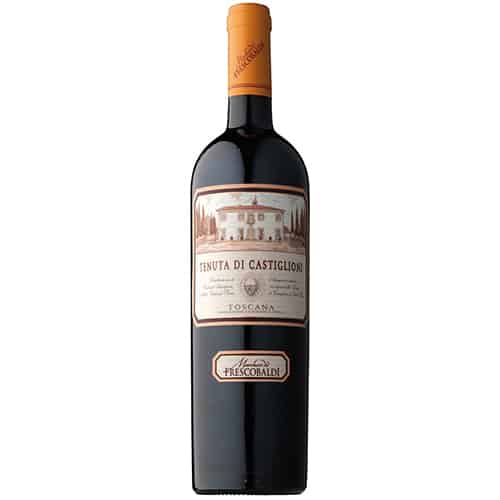
Around the year 1000, the first members of the familymoved to Florence from the Val di Pesa, where their most ancient agricultural estate, the Tenuta Castiglioni, still flourishes today. In that era, the cities in Italy’s centre and north were making impressive advances economically, politically, and financially, to the detriment of the then-dominant feudal system. The noble families began settling in the cities, attracted by the commercial and political advantages offered by the urban agglomerations.
The Frescobaldis established their presence in the Oltrarno district of Florence, in the Piazza de’ Frescobaldi, where they built their palazzo, covered loggia, and tower. In 1252, Lamberto Frescobaldi constructed the first bridge, built of wood, over the Arno, today’s Ponte Santa Trinita, to connect his own properties with Florence’s historic centre.
In 1855, the forebears of the family introduced hitherto unknown vine varietals in Tuscany, including Cabernet Sauvignon, Merlot, Pinot Nero and Chardonnay, paving the way for the future.
The 20th century was characterised by the activities of Vittorio, Ferdinando and Leonardo Frescobaldi, who elevated Tuscany to a place of excellence for viticulture.
Frequently Asked Questions
Where are the Frescobaldi family's estates located?
The Frescobaldi family's properties cover over 1,200 hectares of vineyard in Tuscany, across historic residences, castles and estates including Castello di Nipozzano, home of Chianti Classico, Tenuta Castelgiocondo in Montalcino and Castello di Pomino.
How long has the Frescobaldi family made wine?
The Frescobaldi family's wine production in Tuscany is documented as far back as 1300, with trade agreements with European courts dating from as early as the 12th century. In 1252 Lamberto Frescobaldi had the first bridge over the Arno built in Florence. In 1855 the Frescobaldis introduced to Tuscany varieties then unknown there, such as Cabernet Sauvignon, Merlot, Pinot Noir and Chardonnay.
What wines does the Frescobaldi family produce?
The range spans from Chianti Classico to Brunello di Montalcino, to white wines such as the elegant Pomino, alongside grappas and Cuvée Voyage, a Metodo Classico Brut. A variety that reflects the family's different historic estates, each expressing a different Tuscan terroir.
Are Frescobaldi wines distributed abroad?
Yes: the Frescobaldi family's 11 properties produce about 12 million bottles a year, distributed to over 90 countries worldwide, with over 60% of production destined for international markets, confirming the global reach of a winery with over 700 years of history.
Showing all 4 results